Lubricants reduce friction, wear, and heat in engines and machinery. They protect surfaces, increase reliability, and extend the service life of your components—so your equipment runs when you need it most. From mineral oils to advanced ester or synthetic oils, there's a perfect solution for every machine type, operating level, and environment.

Chemical and tribological properties::
- Temperature (greases become stiffer at lower temperatures and softer at higher temperatures)
- Thickener (carrier of the base oil)
- Base oil
- Additives (generate additional properties)
- Solids content (and particle size)
Miscibility of lubricants:
The miscibility of lubricating greases depends only partially on the miscibility of the base oils and thickeners. The functionality of the lubricant is primarily determined by the composition of the additives. Therefore, consultation with the lubricant manufacturers is always essential. With oils, for example, foaming can occur, or one lubricant may float on top of another and thus be ineffective.
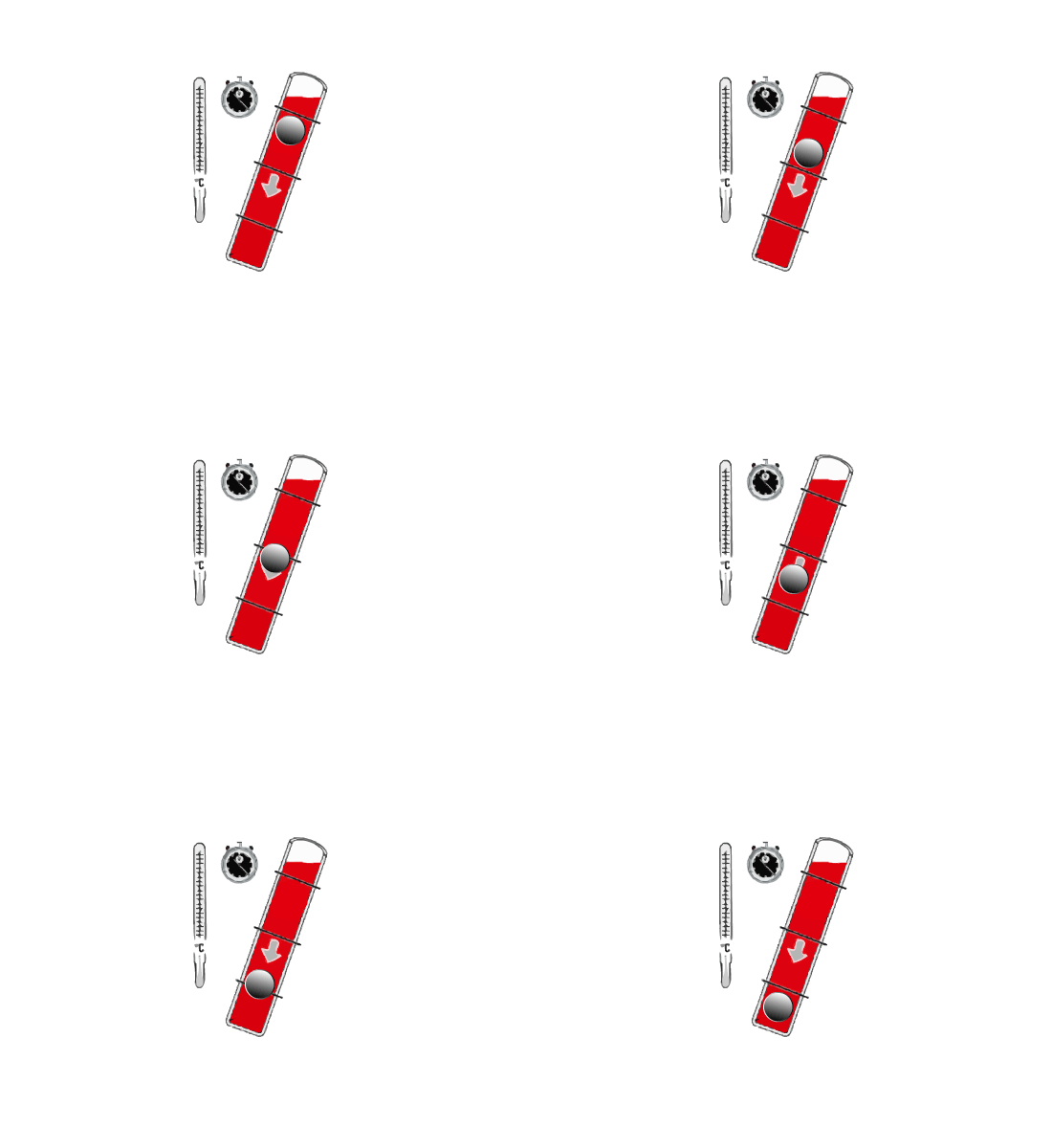
Viscosity:

Consistency:
VKA-Test:
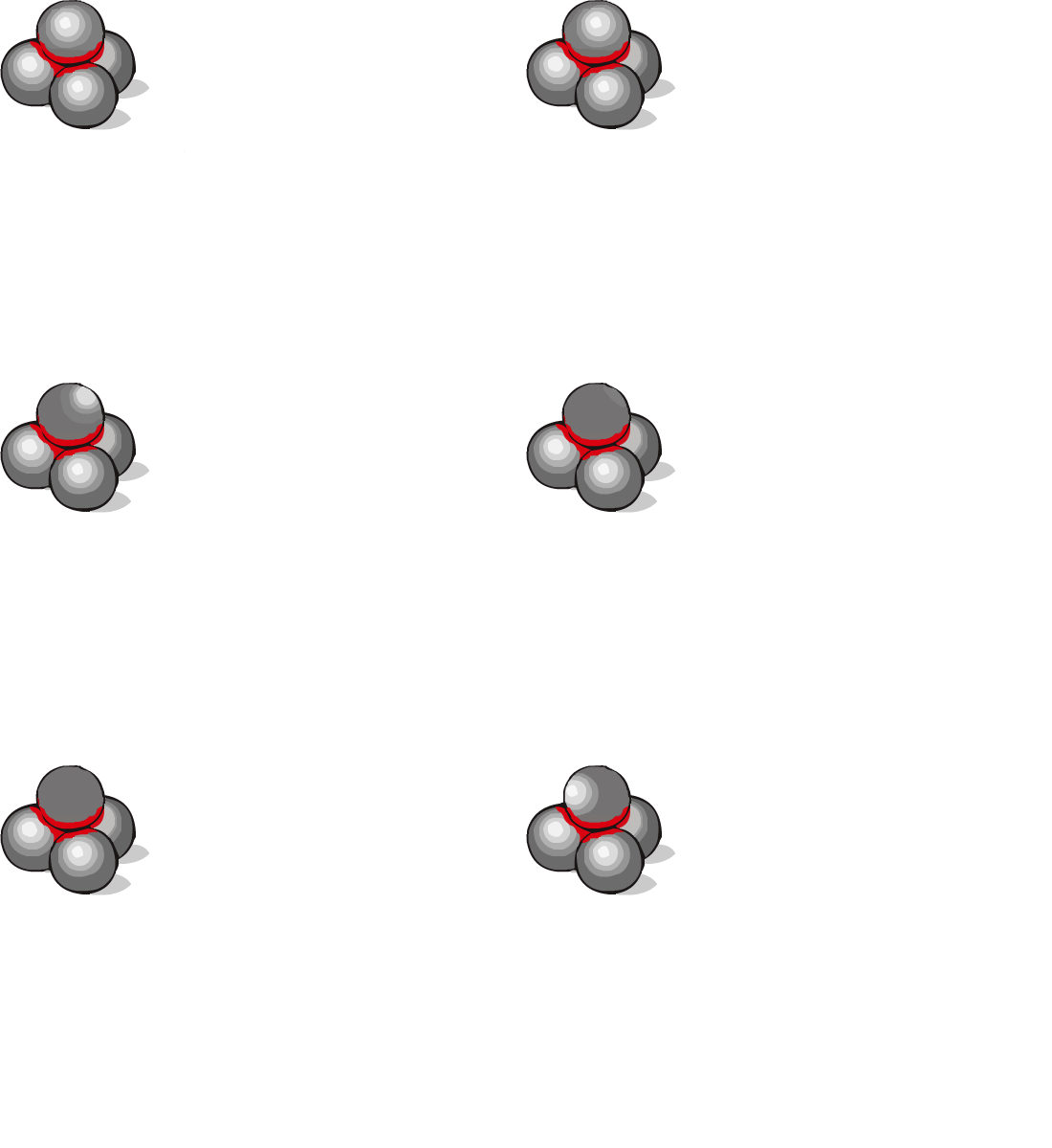
The four-ball tester is a testing device for lubricants used under high surface pressures in the mixed friction regime. According to DIN 51350, the VKA consists of a rotating ball that slides on three stationary balls. During the test to determine the lubricant's maximum load capacity, a test force is applied to the ball, which is gradually increased until the four-ball system welds together due to frictional heat.